
Anti-tarnish gold-plated bracelets are designed to make everyday jewellery easier to wear and maintain. They give you the polished look of gold without requiring the same level of care as more delicate fashion jewellery.
But “anti-tarnish” does not mean “maintenance-free.”
Even durable gold-plated jewellery lasts longer when it is handled, cleaned and stored properly. A few simple habits can help preserve the finish, shine and overall appearance of your bracelets for much longer.
If you wear your jewellery regularly for work, errands, dinners or everyday outings, these care tips will help keep your bracelets looking polished without making jewellery care feel complicated.
1. Understand What Anti-Tarnish Really Means
Anti-tarnish jewellery is made to resist discolouration better than ordinary plated jewellery.
Higher-quality finishes, including PVD gold plating over stainless steel, are generally more durable and resistant to everyday wear than traditional plating.
However, every plated surface is still exposed to skin oils, sweat, moisture, cosmetics, chemicals and friction.
Over time, these can affect how the finish looks.
The goal of proper care is not to make the jewellery “untouchable.” It is simply to reduce unnecessary exposure and keep the surface cleaner for longer.
2. Keep Your Bracelets Away From Harsh Chemicals
One of the easiest ways to protect gold-plated jewellery is to reduce contact with strong chemicals.
Try to avoid exposing your bracelets directly to:
- Perfume
- Hairspray
- Sanitiser
- Cleaning products
- Bleach
- Strong soaps
- Chlorinated water
These substances can gradually dull the surface or affect the plating.
A simple rule is to apply perfumes, lotions and beauty products first. Let them settle on your skin before putting your jewellery on.
This small habit can make a noticeable difference over time.
3. Avoid Wearing Your Bracelets in the Shower
Even when jewellery is designed for better durability, regularly wearing it in the shower can shorten the life of the finish.
Soap, shampoo, hot water and constant moisture create unnecessary exposure.
For the same reason, it is better to remove your bracelets before:
- Bathing
- Swimming
- Doing household cleaning
- Washing dishes for long periods
- Entering pools or hot tubs
Occasional accidental contact with water is usually different from repeated daily exposure.
The aim is simply to avoid making moisture part of the bracelet’s everyday routine.
4. Wipe Your Bracelet After Wearing It
You do not need a complicated cleaning process after every wear.
A quick wipe with a soft, dry cloth is usually enough.
This helps remove:
- Skin oils
- Light sweat
- Dust
- Product residue
- Fingerprints
Use a clean, soft cloth and gently wipe the surface without applying excessive pressure.
This is particularly useful during hot or humid weather, when jewellery may come into contact with more perspiration throughout the day.
5. Clean Gently When Needed
If your bracelet needs more than a quick wipe, keep the cleaning process simple.
Use a soft cloth slightly dampened with plain water and gently clean the surface. Dry the bracelet thoroughly afterwards.
Avoid abrasive materials, rough tissues, polishing compounds and harsh jewellery cleaners unless they are specifically suitable for plated jewellery.
Strong rubbing may create unnecessary friction on the plated finish.
Gentle cleaning is almost always the better choice.
6. Store Your Bracelets Separately
How you store jewellery matters almost as much as how you wear it.
Instead of placing several bracelets together in one box or pouch, store them separately whenever possible.
This helps prevent:
- Scratches
- Friction
- Tangling
- Clasps rubbing against other jewellery
A soft pouch or separate jewellery compartment works well.
Before storing the bracelet, make sure it is completely dry.
If you live in a humid environment, keeping jewellery in a cool, dry storage space can also help maintain its appearance.
7. Don’t Throw Your Jewellery Into Your Handbag
It is easy to remove a bracelet during the day and place it directly inside your handbag.
But keys, coins, chargers, makeup products and other items can scratch or damage the finish.
If you regularly remove jewellery while travelling or working, keep a small jewellery pouch inside your bag.
It takes very little space and gives your bracelet a safer place to stay until you wear it again.
8. Remove Bracelets Before Exercise
Sweat itself is not always an immediate problem, but frequent exposure combined with movement and friction can affect jewellery over time.
During workouts, bracelets may also rub against equipment or get caught while exercising.
It is safer to remove them before:
- Gym sessions
- Running
- Yoga
- Sports
- Heavy physical activity
Your jewellery will stay cleaner, and you will also avoid unnecessary scratches or impact.
9. Be Mindful While Working at a Desk
Bracelets designed for working women should feel comfortable at a desk, but some everyday habits can still create wear.
Typing, resting your wrist against the edge of a laptop and repeatedly moving your bracelet across a hard desk surface all create friction.
If you wear bracelets daily while working, pay attention to how they sit on your wrist.
A comfortable fit and a low-profile design can reduce unnecessary movement and rubbing.
This is one reason practical bracelet design matters just as much as appearance.
10. Rotate Your Jewellery
Wearing the same bracelet every single day naturally exposes it to more friction, moisture and environmental contact.
If you own several pieces, rotate them.
For example:
- Wear a lighter chain bracelet for everyday office wear.
- Choose a bolder link bracelet for meetings or dinners.
- Keep another style for weekends or special occasions.
Rotation gives each piece a break and can help extend the life of your jewellery collection as a whole.
11. Know When to Take Your Bracelet Off
One of the easiest ways to protect plated jewellery is simply knowing when not to wear it.
Remove your bracelet before activities where it may come into contact with excessive moisture, chemicals, friction or impact.
You do not need to treat your jewellery as fragile.
You just need to avoid situations that create unnecessary wear.
That balance is what makes jewellery care practical rather than restrictive.
A Simple Daily Care Routine
Caring for anti-tarnish gold-plated bracelets does not need to take more than a minute.
Use this simple routine:
Before wearing:
Apply perfume, lotion and skincare first.
After wearing:
Wipe the bracelet gently with a soft, dry cloth.
Before storing:
Make sure it is clean and completely dry.
While storing:
Keep it separately in a pouch or jewellery compartment.
That is usually enough for everyday maintenance.
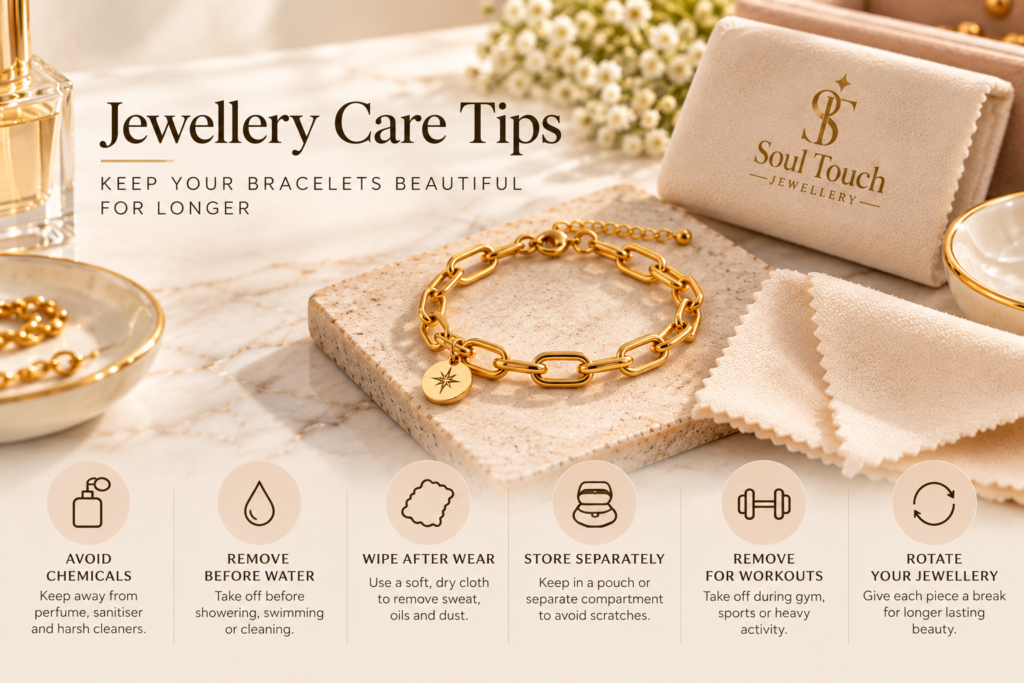
Simple everyday care tips to help your gold-plated bracelets stay beautiful for longer.Does PVD Gold Plating Need Special Care?
PVD gold plating is known for offering better durability than many traditional plating methods.
At Soul Touch Jewellery, our bracelets are designed using 316L stainless steel with 18K PVD gold plating to offer a polished finish with practical, everyday durability.
That does not mean the jewellery should be exposed unnecessarily to chemicals, moisture or rough handling.
Good care simply helps the finish perform at its best for longer.
Final Thoughts
Anti-tarnish jewellery is designed to fit more easily into real life.
You should be able to wear your bracelets to work, style them for dinner, and enjoy them regularly without constantly worrying about maintenance.
A few simple habits—keeping them dry, wiping them after wear, storing them separately and avoiding harsh chemicals—can make a meaningful difference.
Treat your jewellery with reasonable care, not fear.
The goal is to enjoy it often while helping it stay polished, refined and ready for the next part of your day.
At Soul Touch Jewellery, we create gold chain and link bracelets for modern working women who want jewellery that feels elegant, wearable and easy to live with.
Wear the Life You’re Building.