
Gold-finish jewellery can look similar at first glance, but the way that gold colour is applied can make a significant difference to how the jewellery wears over time.
If you have been shopping for everyday jewellery, you may have come across terms such as PVD gold plating, gold plating, electroplating, or 18K gold finish. They can sound confusing, especially when two pieces look almost identical in photographs.
Understanding the difference between PVD gold plating and regular gold plating can help you make a more informed decision about the jewellery you choose for everyday wear.
Here is what each process means, how they differ, and what you should look for before buying gold-finish jewellery.
What Is Gold-Plated Jewellery?
Gold-plated jewellery is made by applying a layer of gold or gold-coloured material over a different base metal.
The jewellery underneath may be made from materials such as stainless steel, brass or another metal, while the outer surface provides the appearance of gold.
This allows jewellery to achieve a polished gold look without being made entirely from solid gold.
However, not all gold plating is applied in the same way.
The base metal, plating process, coating thickness, preparation of the surface and everyday use can all influence how a piece performs over time.
What Is Regular Gold Plating?
Traditional gold plating commonly uses an electroplating process.
During electroplating, an electrical current helps deposit a thin layer of gold onto the surface of another metal.
This method is widely used across fashion and costume jewellery because it can create an attractive gold finish at an accessible price.
The appearance can be beautiful, but the durability of the finish varies considerably.
A very thin plated layer may gradually wear away in areas that experience frequent friction, such as around clasps, edges or the underside of a bracelet.
This does not necessarily mean that all traditionally plated jewellery is poor quality. The result depends heavily on how the jewellery has been manufactured.
What Is PVD Gold Plating?
PVD stands for Physical Vapour Deposition.
Instead of relying only on a conventional electroplating process, PVD applies a coating within a controlled vacuum environment.
Material is transformed into vapour and deposited onto the surface of the jewellery, creating a tightly bonded finish.
PVD technology is used across several industries where surface durability and appearance are important, including watches, jewellery and other metal products.
For jewellery, PVD is especially popular when used with stainless steel.
The combination can create a polished gold finish suitable for modern everyday jewellery.
PVD Gold Plating vs Regular Gold Plating
Although both methods are designed to create a gold-coloured surface, the process used to achieve that finish is different.
Bonding to the Surface
Traditional electroplating deposits a layer of metal onto the jewellery through an electrical process.
PVD coatings are created in a vacuum environment and can form a strong bond with a properly prepared metal surface.
Because of this, PVD is often chosen for products where improved wear resistance is desirable.
Wear Resistance
One of the biggest reasons PVD has become popular in everyday jewellery is its resistance to normal surface wear.
A well-applied PVD finish can generally withstand daily use better than very thin conventional plating.
However, no plated or coated jewellery should be treated as completely permanent.
Scratching, repeated friction, chemicals and improper care can still affect the finish.
Appearance
Both PVD and traditional gold plating can produce an attractive gold appearance.
The final colour depends on the materials and manufacturing process used.
For example, an 18K gold-colour finish typically has a warm, refined tone that works well with both professional and casual styling.
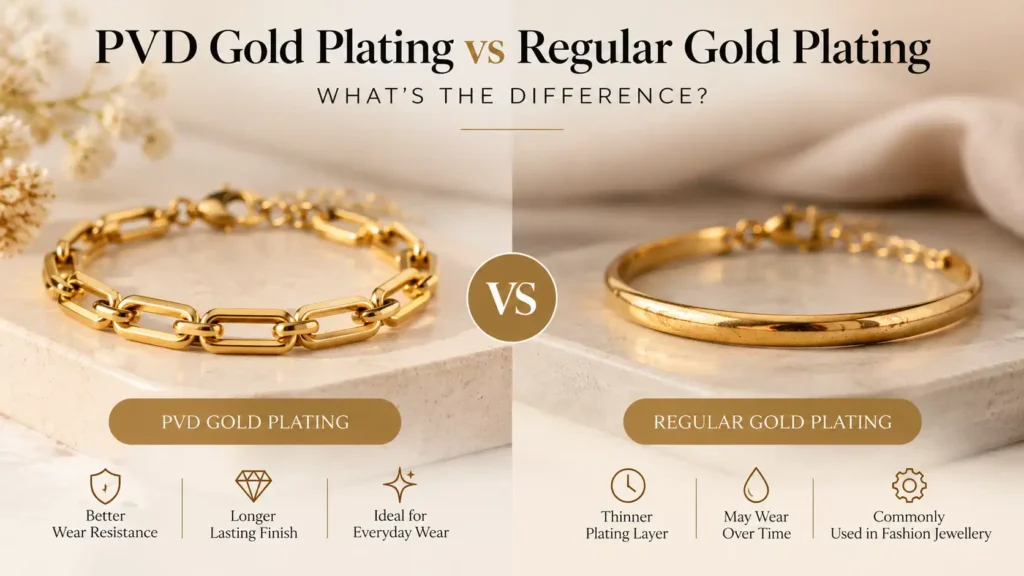
The visual difference between PVD and regular plating may not always be obvious when jewellery is new. The greater difference may become more noticeable through repeated wear.
Why Is PVD Often Used With Stainless Steel?
Stainless steel has become increasingly common in modern everyday jewellery.
It provides a strong base structure and works particularly well with PVD finishing.
One grade you may frequently see is 316L stainless steel.
316L is known for its corrosion resistance and durability, which makes it a practical base material for jewellery designed for regular use.
When a PVD gold finish is applied over a well-prepared stainless-steel surface, the result can combine the strength of the underlying metal with the refined appearance of gold-coloured jewellery.
At Soul Touch Jewellery, our gold-finish bracelet collection uses 316L stainless steel with an 18K PVD gold finish.
Does PVD Gold Plating Tarnish?
This is one of the most common questions shoppers ask.
PVD-finished stainless-steel jewellery is often chosen because it generally offers good resistance to tarnishing and everyday environmental exposure.
However, terms such as “anti-tarnish” should not be interpreted as meaning that jewellery can never change under any circumstances.
Jewellery is exposed to:
- skin oils;
- sweat;
- perfume;
- cosmetics;
- cleaning products;
- humidity;
- water;
- friction; and
- everyday surfaces.
How a piece ages therefore depends on both manufacturing quality and how it is worn and cared for.
Good-quality materials and finishing can improve resistance, but proper jewellery care remains important.
Is PVD Gold Plating Waterproof?
You may see jewellery described online as waterproof.
It is better to treat this term carefully.
PVD coatings can provide good resistance to moisture, particularly when applied to stainless steel, but repeated exposure to water, chlorine, salt water, soaps and chemicals can still affect jewellery over time.
Occasional contact with normal water is very different from repeatedly wearing jewellery while swimming, showering or using cleaning products.
If you want to preserve the appearance of your jewellery for as long as possible, reducing unnecessary chemical and water exposure is still a sensible habit.
How Long Does PVD Gold Plating Last?
There is no single number that applies to every piece of PVD jewellery.
Longevity depends on several factors, including:
- coating quality;
- coating thickness;
- base metal;
- surface preparation;
- frequency of wear;
- friction;
- exposure to chemicals; and
- jewellery care.
A bracelet worn several times a week at a desk experiences different conditions from jewellery worn while exercising, swimming or doing household cleaning.
This is why it is better to evaluate the complete product rather than relying only on the term “PVD.”
PVD Gold Plating for Everyday Bracelets
Bracelets experience more contact with surrounding surfaces than many other types of jewellery.
Your bracelet may touch:
- laptop edges;
- desks;
- handbags;
- clothing;
- watch straps;
- tables; and
- other bracelets.
For working women who wear jewellery throughout the day, durability and comfort become especially important.
This is one reason stainless-steel bracelets with PVD gold finishing can be well suited to everyday styling.
They offer the appearance of polished gold jewellery while being designed around the practical requirements of regular wear.
What About Gold-Plated Brass Jewellery?
Brass is another widely used base metal in fashion jewellery.
It can produce beautiful designs and allows manufacturers to create many shapes and styles.
However, the underlying metal behaves differently from stainless steel.
As the outer plating gradually wears, brass can become more noticeable underneath. Some wearers may also find certain metal compositions less suitable for their skin.
This does not mean that all brass jewellery is inferior. Quality varies enormously between manufacturers.
But when choosing jewellery for frequent wear, it is worth checking the base metal instead of looking only at the gold colour.
What Does 18K PVD Gold Mean?
When you see 18K PVD gold finish, it generally refers to the colour and composition used to create the gold-toned outer surface through a PVD process.
It does not mean that the entire bracelet is made from solid 18K gold.
This distinction is important.
A stainless-steel bracelet with an 18K PVD gold finish combines a non-gold base metal with a gold-coloured surface treatment.
This allows the jewellery to deliver a luxurious-looking finish while remaining much more accessible than solid gold jewellery.
Is PVD Gold Plating Real Gold?
The answer depends on the specific coating formulation used by the manufacturer.
Some PVD processes incorporate gold or gold-related materials, while others use compounds designed to achieve a particular gold tone.
Therefore, customers should always read the product specifications rather than assuming that every PVD gold finish contains the same materials or amount of gold.
What matters most for everyday jewellery is understanding exactly what you are purchasing.
Look for clear information about:
- base metal;
- finish;
- plating method;
- colour;
- care instructions; and
- warranty.
Transparent product descriptions make comparison much easier.
Is PVD Gold Plating Better for Everyday Wear?
For many shoppers looking for modern everyday jewellery, PVD-finished stainless steel offers a useful combination of appearance, durability and practicality.
Its advantages can include:
- a refined gold appearance;
- good wear resistance;
- compatibility with stainless steel;
- relatively low maintenance; and
- suitability for frequent styling.
However, the word “PVD” alone is not a guarantee of quality.
Manufacturing standards still matter.
A well-made conventional plated piece can outperform a poorly manufactured PVD piece.
The most reliable approach is to consider the material, finishing process, product details and brand standards together.
How to Care for PVD Gold Jewellery
Even durable jewellery benefits from simple care.
After wearing your bracelet, gently wipe the surface with a soft, dry cloth to remove oils or moisture.
Try to avoid direct contact with perfume, hairspray, harsh cleaning products and abrasive materials.
When you are not wearing the jewellery, store it separately to reduce scratching and repeated friction against other pieces.
If cleaning is required, follow the brand’s care instructions. In many cases, mild soap and lukewarm water can be used for gentle cleaning, followed by thorough drying.
Avoid aggressive polishing unless the manufacturer specifically recommends it.
The aim is to preserve the surface rather than repeatedly polish it.
What Should You Check Before Buying Gold-Finish Jewellery?
Beautiful photographs are important, but product specifications tell you much more about the jewellery you are buying.
Before purchasing, check whether the brand clearly states the base metal.
Look for information about the type of plating or finish.
Check the dimensions, clasp and adjustability if you are buying a bracelet.
Read the jewellery-care instructions.
Also check whether the product comes with a warranty or after-sales support.
These details can help you distinguish between jewellery created primarily for appearance and jewellery designed with regular wear in mind.
Choosing Jewellery for a Modern Working Wardrobe
For working women, jewellery often needs to move through an entire day.
A bracelet may be worn during the morning commute, at a laptop, through meetings, during lunch and later at dinner.
That means jewellery needs to offer more than a beautiful first impression.
Comfort, versatility and material choice matter too.
A refined gold bracelet made from 316L stainless steel with PVD finishing can pair easily with shirts, blazers, kurtas, dresses and smart-casual outfits.
The same piece can remain understated during office hours and still feel polished enough for evening plans.
PVD Gold Plating vs Regular Gold Plating: Which Should You Choose?
The right choice depends on how you plan to wear your jewellery.
If you purchase jewellery primarily for occasional styling, many types of gold plating can work beautifully.
If you are looking for jewellery you expect to wear frequently, it can be worth paying closer attention to the base material and finishing method.
PVD-finished stainless-steel jewellery is especially appealing for shoppers who want a refined gold look combined with practical everyday wear.
Traditional gold plating can also be a good option when the plating quality and manufacturing standards are high.
Rather than choosing based on a single label, look at the complete product.
The Final Takeaway
The biggest difference between PVD gold plating and regular gold plating is the way the outer finish is applied.
Traditional gold plating commonly uses electroplating, while PVD uses a vacuum-based deposition process that can create a strongly bonded and wear-resistant surface.
For everyday jewellery, especially bracelets that regularly come into contact with desks, laptops and clothing, the combination of 316L stainless steel and an 18K PVD gold finish can offer a practical balance of durability and refined appearance.
At Soul Touch Jewellery, we choose materials with real life in mind—because jewellery should not only look beautiful when you open the box. It should fit comfortably into the life you are building.